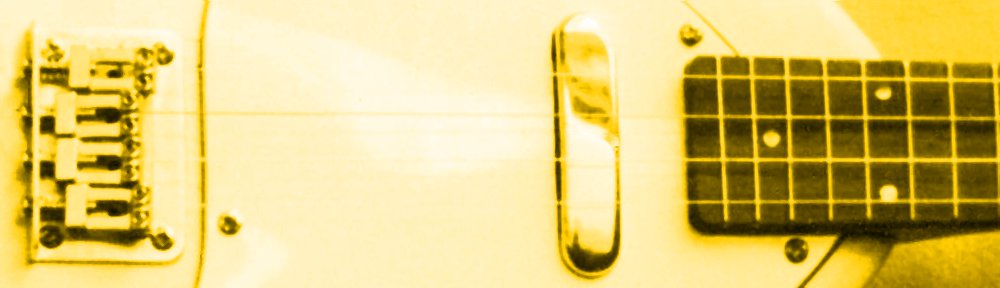
Tearcaster uke build : part 01 – Plans

Before starting any ukulele build, your going to need to get a plan!

I got my plans from Michael J King, who sells a sets of either printed plans or PDF plans delivered by e-mail. The plans are for a steel strung electric ukulele. You can chose between soprano, concert or tenor scaled necks when you build. I am going to go for a soprano sized neck for this Uke. Although the body shape is different, the build principals for this uke resemble that of a fender telecaster or stratocaster. The neck is bolted onto a one piece body with either one or two single coil pickups and a fender style bridge/tailpiece. I could have used strat 6-string parts for the bridge and pickups, but for the best look, I think dedicated 4 string parts should be used. All the other techniques used for the build can be researched in a electric guitar builders book.

I will be calling this my ‘Tearcaster Build’ and hopefully when it is finished I will have built something that looks like one of Michael’s own Ukes.

Tearcaster uke build : part 02 – Acquiring the neck

Locating timbre for instrument building is no easy task. I think there is only about 4 or 5 suppliers of tone woods in the UK and the prices on their woods are beyond what I have been prepared to pay. Essentially, I am a first time builder, and as such, paying £60 or £70 or £80 just for a block of wood to make a body out of could turn out to be an expensive mistake. You need to spend money on many other things as well. Nobody should expect a home built instrument to cost less than a factory built one of the same kind of quality… It just is not possible. I have been looking at ways to keep prices down though…. Recycling old bits of wood gathered by putting requests out on free recycling web sites such as freecycle or putting speculative bids on lumps of wood on ebay seem to be good ideas, so that’s what I have been doing. Occasionally, I come up trumps. In this case, I defiantly did.

There I was poking around ebay looking for ‘neck blanks’, which are the lumps of wood used to make guitar necks out of when I found, purely by luck, that the same fellow who supplied me the plans for the ‘tearcaster’ uke, Michael J King, was actually selling some bits. I was happy to pay £25 for this neck. He says it is a blank, but a massive amount of the work has been done to shape it already, and I know it will fit, because it is built from the same specs.

SU uke build : part 01 – Plans

Another ukulele build under way. Once again, I feel getting the plans right before embarking on cutting wood is really important. So many charectaristics of the build need to be considered.

Gibsons SG guitar is an iconic guitar played by the likes of AC/DC’s Angus Young and Black Sabbath’s Tonni Iomi. It is a solid guitar (hence SG) made from mahogany, with twin humbuckers. My version is obviously a Solid Ukulele and therefore SU.

I have not seen anything quite like what I was looking for in this SU. There are electric ukes out there that are styled like Gibson Les Paul’s and they look really good too, but they don’t seem to truely embrace the Gibson design totally.

For instance, there is a German company called Risa who make lovely looking Les Paul style ukes. While they do have both neck and bridge humbuckers and 2+2 opposing machine heads, the bridge looks like a Fender bridge. I really want to maintain the Gibson look and feel, so for my build, I am going to have to look for Gibson style bridges.

For the body shape, I took some SG pictures I found on google and traced them (in software), and scaled the outline down to ukulele size. This one is going to be a tenor scale uke, purely because tenors fit my finger size better, and it gives more playable frets. The gaps at the high end of the neck on sopranos and concert style ukes are mostly too small for my fingers and therfore unplayable for me.

At this stage I am not sure about how to tune it though. As I have already decided to go Tenor to give more high end space, it seems logical to use a low ‘G’. Tenors can be either tuned to re-entrant gCEA or have a sequential GCEA tuning. Smaller ukes such as sopranos are typically all gCEA, where the ‘g’ string is one octave higher, or to put it another way, 2 semitones lower than the high ‘A’ string. Having said all that, I have never played a low ‘G’ tuned uke and may change my mind if it does not sit right. I think low ‘G’ will give a more rock sound though.

Pickups are another important thing to consider. On the Tearcaster build, I thought just one single coil pickup is enough. The simplistic build. For this SU build, 2 pairs of humbuckers are the order of the day.